

The Factory Without Walls and the Rise of Distributed Design
Distributed design allows design knowledge to circulate globally while production takes place locally.Why the New Production Culture Promises a More Local, Distributed and Human-Scale Future
There was a time when production was invisible. We did not know where a product was made. Nor did we need to. A product could be designed in one country, manufactured on another continent and sold in an entirely different part of the world.
For decades, this system was considered the height of efficiency. Bigger factories. Longer supply chains. Lower costs. More production.
Growth, efficiency and scale became the most important measures of success in modern manufacturing. The distance between designers and manufacturers continued to grow. The person who designed a product often never met the people who made it. Production processes became standardised and centralised, and over time, the people behind production became invisible.
Yet in recent years, a quiet but powerful question has begun to emerge in the design world: Does it still make sense to manufacture everything on the other side of the world?
This question is not just about logistics or economics. It is about the future of design culture.
Today, where things are made is being questioned just as much as how they are made. And this debate is bringing a new production culture with it, increasingly connected to distributed design.
Following the Industrial Revolution, production became increasingly centralised. Manufacturing facilities grew larger. Production processes became standardised. The distance between designers and manufacturers widened. The person designing a product often never met the person making it. This system built the global economy. Yet over time, it also revealed certain vulnerabilities.
Supply chains disrupted during the pandemic, logistics crises and rising transport costs demonstrated that production could not be understood through efficiency alone. For the first time, a global system long considered almost flawless began to face serious scrutiny.
The design world was confronted with a reality: Local production may not simply be a romantic idea, but a strategic necessity.
Today, from architecture studios and furniture manufacturers to independent designers and technology start-ups, many are asking the same question: Must production always be centralised? Or are more flexible, local and resilient models possible?
This is where the most interesting aspect of the new production culture begins. In the past, products travelled. Today, increasingly, design files are travelling instead.
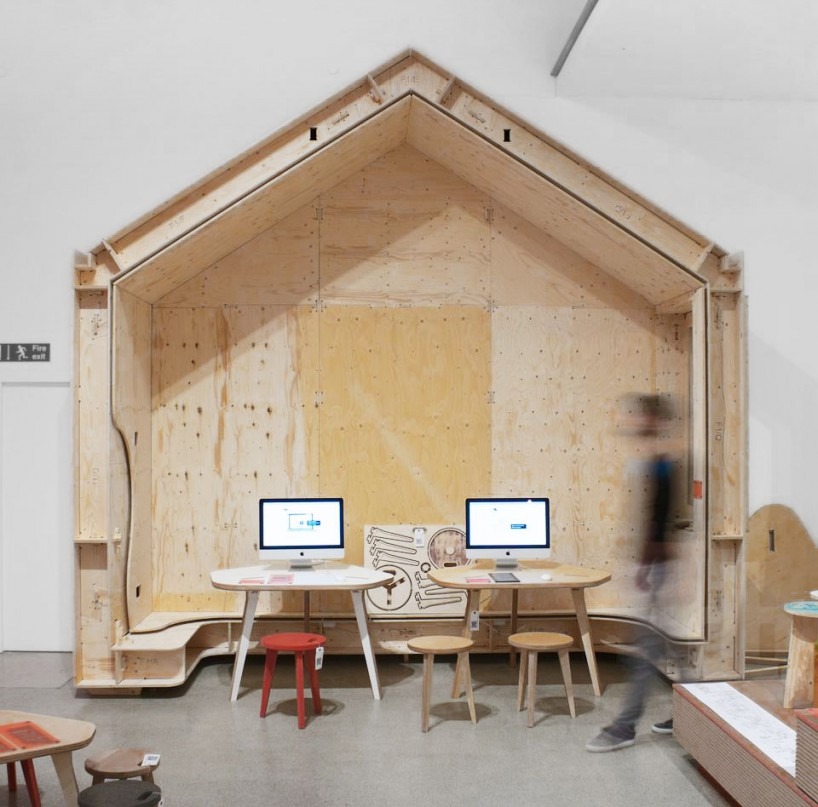
One of the best-known examples of this approach is Opendesk, which connects customers with local manufacturers by sharing furniture designs digitally. The company describes itself as a “global platform for local making” and encourages products to be manufactured locally rather than shipped from the other side of the world.
At first glance, this approach may seem simple. But it fundamentally changes the logic of production.
A table no longer needs to be shipped from London to Istanbul. Instead, its design file is sent. Production takes place locally. In this way, information circulates globally while production becomes local.
Perhaps this is precisely where the essence of the new production culture lies.
Information travels.
The Maker Movement Is Not a Hobby
Today, many people still see maker culture as a niche activity pursued by enthusiasts working in workshops. Yet the reality is much broader.
The Fab Lab Network operates as a global network of fabrication laboratories across numerous countries, aiming to democratise access to digital fabrication tools.
Rather than managing production from a single centre, the Fab Lab model sees it as a connected system operating across different locations.
The factory of the future may not be a single building. It may be a network.
This approach is concerned not only with where things are made, but also with who can make them. It distributes production capacity beyond a handful of large factories to wider communities. And this is beginning to challenge established assumptions about the future of manufacturing.
The Rise of Distributed Design
One of the concepts increasingly discussed across Europe in recent years is distributed design.
The Distributed Design Platform operates as a network connecting designers, manufacturers and maker communities across Europe. The platform supports local production, open-source approaches, the circular economy and design-led collaboration.
The central idea behind this approach is remarkably simple: The information needed to manufacture a product can reach anywhere in the world. Yet production can take place using local resources.
This model is not only more sustainable. It is also more flexible. More resilient. And often more human.
Because it brings production closer to the user. It makes the manufacturer visible. And it reconnects design with making.
The Quiet Revolution of Open-Source Design
Another important element at the heart of the new production culture is the open-source approach.
Long established in software development, this model is now entering the design world. Many projects developed within the Fab Lab Network operate according to open-source principles.
Design files, manufacturing knowledge and technical processes can be shared between communities.
The aim is not simply to produce more products. It is to accelerate the exchange of knowledge.
This also changes what it means to be a designer.The next generation of designers is no longer defined solely by the ability to create form. Designers also share knowledge. Build communities. Create production networks.Designing how a product enters circulation is becoming as much a part of the creative process as designing the product itself.
So why is all this happening now?
Because technology has reached a certain level of maturity.Digital fabrication tools have become more accessible. Sharing knowledge has become easier. Access to global networks has become commonplace.And most importantly, people have begun to feel that production has moved too far away from the human scale.For many years, size meant power in the design world. Today, different values are coming to the fore.
Flexibility, adaptability, locality, communities and resilience.For many creative enterprises today, what matters is being able to establish the best connections with the world.
The New Factory Is a Network.
In the years ahead, the world’s most effective distributed design and production systems may not be the largest factories. They may be the best connected.
Systems capable of bringing local manufacturers, maker communities, digital fabrication centers, open-source designers, material networks and users together within the same ecosystem will come to the fore.
Because the new production culture reminds us of something important:The future of production does not have to be faster alone.It can also be closer.More local.More participatory.And perhaps most importantly, it can return to a human scale.
For many years, we tried to make production bigger.Perhaps now we are trying to make it meaningful again.And perhaps this is precisely what the new production culture is really about: Making production not only efficient, but visible, local and human again.