Biomaterial Startups and the Challenge of Scale
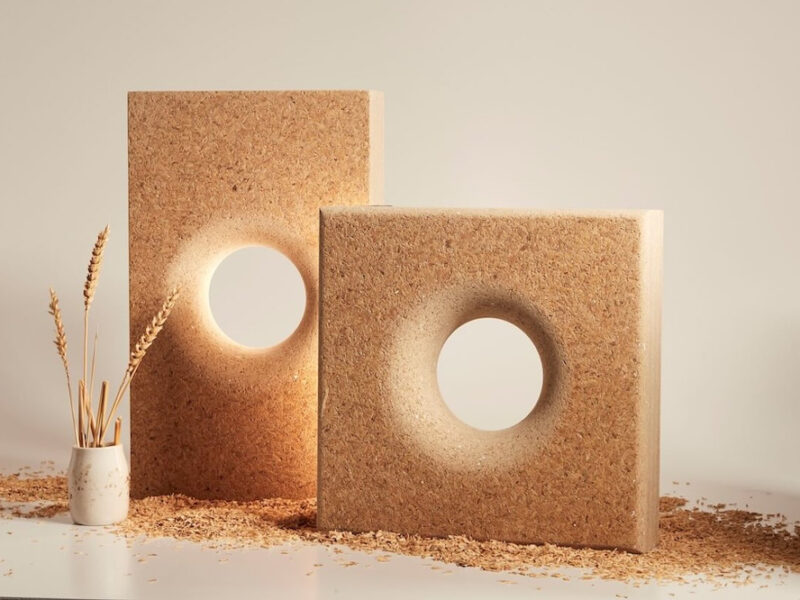
Can rice husks become a building material?
Or can the waste left behind by olive oil production become the raw material for an interior surface?
In recent years, the number of answers to these questions has been growing. At the same time, the number of biomaterial startups is increasing. In Spain, rice husks are being transformed into panels. In Cyprus, olive pits are being used in furniture production as part of biomaterial production. In Finland, wood fibres are being used in acoustic ceiling systems.
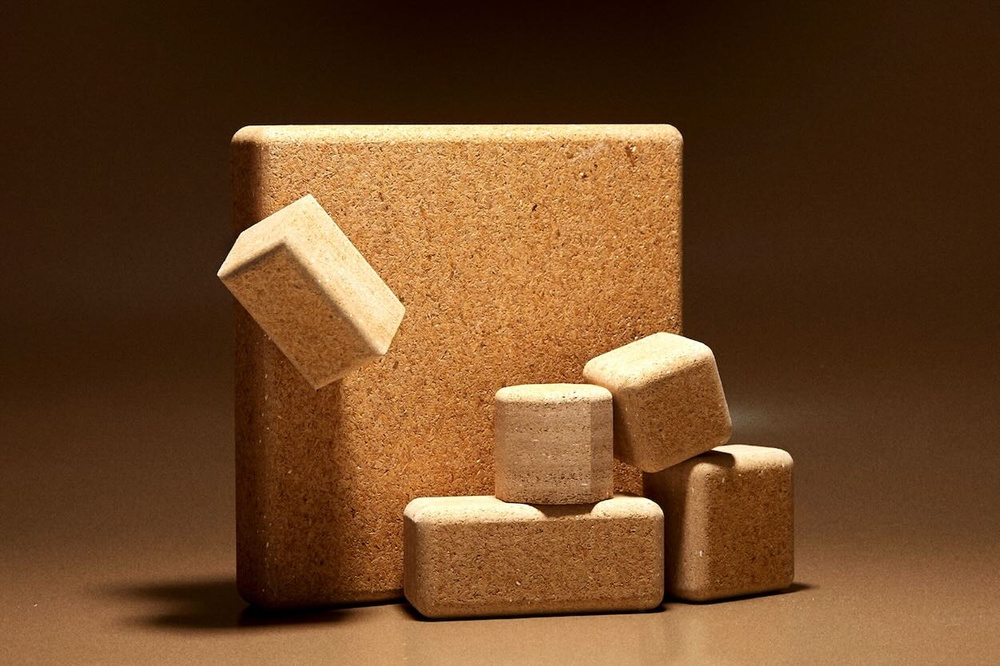
Spanish startup Birdmind produces RiceTab panels from rice husk waste generated in the Galicia region. Before founding the company, Birdmind’s founder David Camba García spent 17 years working in the contract furniture industry.
In this period, he also identified the market the new material could enter.Today, RiceTab is not an experimental laboratory product but a commercial product for the interior and furniture sectors.
Cyprus-based Pit-To-Table develops Pit-Board panels using pomace waste generated during olive oil production. These panels, which are approximately 18 millimetres thick, can be used in furniture and interior applications. The raw material is collected from producers across different parts of the island.
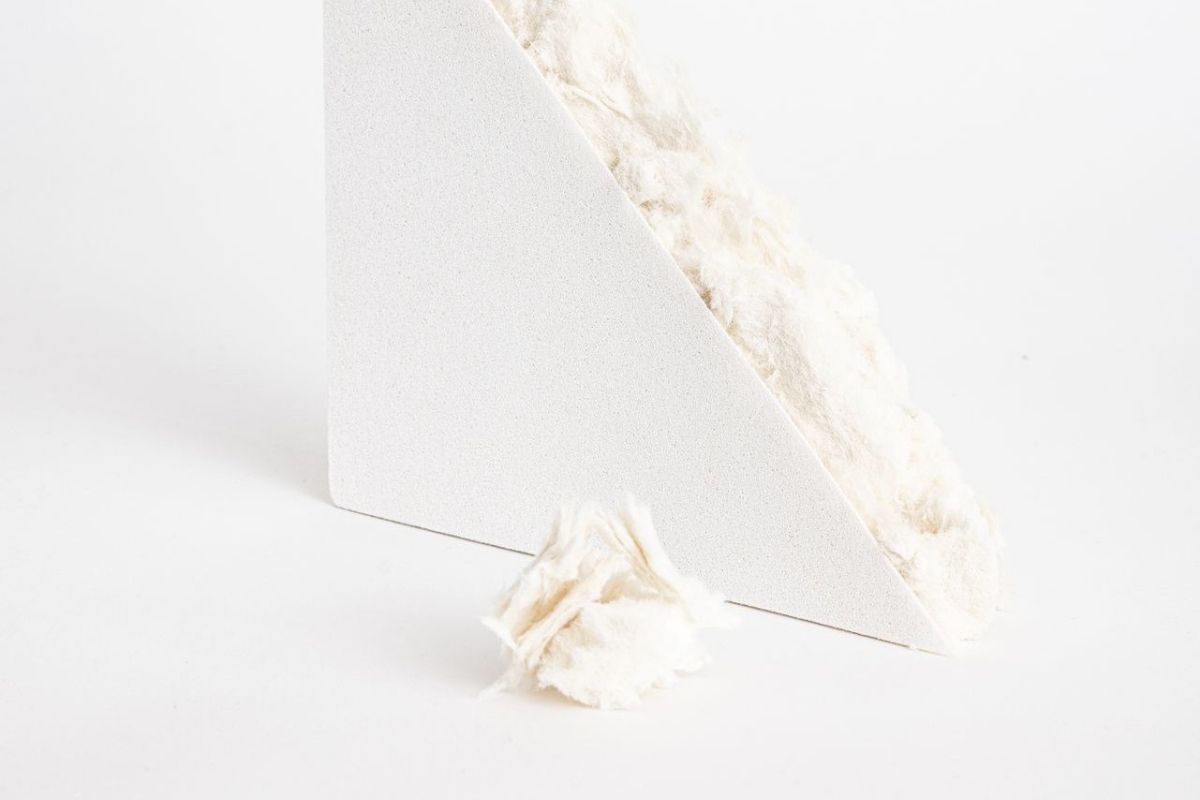
One of these biomaterial startups, Finland-based Aisti, uses foam-forming technology from the paper and pulp industry in acoustic ceiling panels instead of developing a new raw material. The panels contain no synthetic binders and can store carbon. The company’s €29 million Series A investment and the €20 million loan provided by the European Investment Bank also show that biomaterials are no longer viewed solely as a subject of research.
Although these examples appear to operate in different sectors, they all face the same question:
How does a biomaterial startups scale after leaving the laboratory?
The problem often does not show up in the material’s performance. Temperature, humidity and oxygen levels that are controlled in laboratory conditions can change as production volumes grow. In mycelium-based systems in particular, it is not always possible to repeat at a larger scale the results achieved at a smaller one. Many biomaterial startups companies succeed during the research phase but struggle once they move into production.
In the construction industry, standard materials such as steel, concrete and drywall have been assessed using the same testing systems for decades. Biomass-based materials such as hemp, straw, mycelium and bamboo are still not fully included in these standards. From fire performance to durability testing, many approval processes continue to extend the time it takes for new materials to enter the market.
MycoWorks, the company behind the mycelium-based leather alternative Reishi, made significant investments in large-scale manufacturing but was forced to restructure its production model due to operational costs and order volumes. Similarly, Bolt Threads discontinued its Mylo programme despite collaborations with Adidas and Stella McCartney.
Biomaterial startups such as Aisti, Birdmind and Pit-To-Table are growing at smaller but more controlled scales. What they share is an approach that considers existing production systems, local raw materials and clearly defined markets together.