The Ismaili Center in Houston by FMA’s new hub
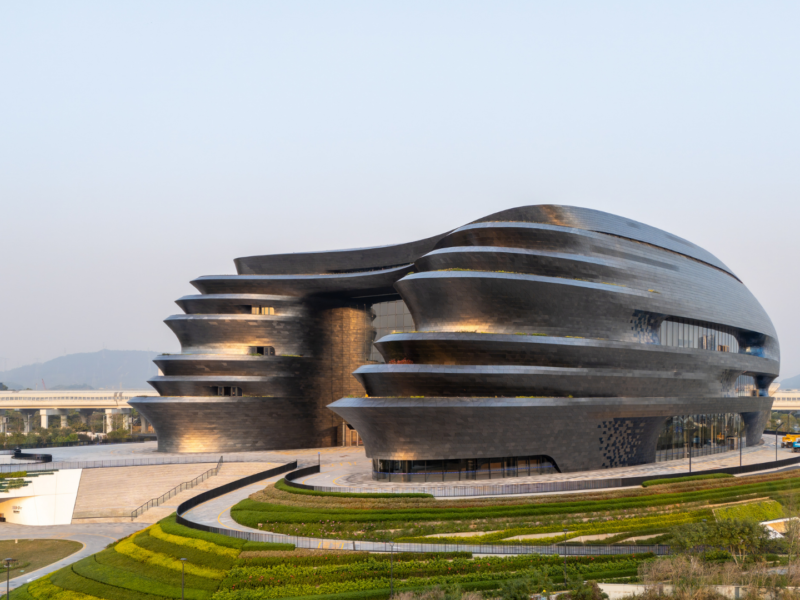
The Ismaili Center in Houston has opened in Texas, designed by Farshid Moussavi Architecture. This new building occupies a prominent position at the corner of Allen Parkway and Montrose Boulevard, securing an important place in the city’s architectural landscape.
Commissioned by His Highness the Aga Khan, who leads the Aga Khan Development Network (Aga Khan Projects), the facility was largely completed in 2025 and is specifically designed to host numerous cultural and social events.

Tailored to Houston’s often hot and humid climate, the building is composed of a tripartite form, with each section featuring a tall veranda known as an eivan. This new structure joins a global network of architectural embassies, solidifying the importance of Aga Khan Projects worldwide.
These eivans are elevated public spaces that are essential to the building’s function, enabling social and cultural and social events to be held in the open air throughout the year.

The verandas are consciously supported by forty-nine slender columns, a direct architectural reference to historic Persian and Isfahani traditions. Designed to be open and inviting from every direction, the eivans transform the Center into a notable source of light along Montrose Boulevard and Allen Parkway once night falls.

The Center’s mission focuses intently on promoting communal understanding and supporting pluralism, while dedicating itself to increasing civic outreach within the community.

The final structure successfully integrates modern technology, such as a light steel frame, with traditional Iranian forms. These traditional elements, including ceramic mosaics and detailed screens, draw inspiration from global Islamic traditions.

The stone exterior is crafted like a tapestry, transitioning between solid areas and porous screens. These screens provide necessary shade and ensure privacy, yet the facade remains defined by its simple form, openness, and abstract decoration.

Inside, the organization revolves around three central atriums, which function as flexible, communal spaces connecting the dedicated rooms for specific activities. Each atrium is positioned adjacent to an eivan, allowing ample natural light to fill the building’s core and offering views of the sky.

The central atrium is architecturally significant, featuring a stepped structure clad in ceramic screens that reflect the ancient legacy of the cupola form, central to both Sasanian and Byzantine architecture.

The 14,000 square meter building is a new landmark, containing public areas like an exhibition gallery, a black box theater, banquet halls, and meeting rooms. The Ismaili Center in Houston stands as a vibrant hub, equally devoted to spiritual contemplation and robust communal engagement through its commitment to hosting cultural and social events.

This new structure joins a global network of architectural embassies, further emphasizing the significance of Aga Khan Projects worldwide. The Center’s mission focuses intently on promoting communal understanding and supporting pluralism, while dedicating itself to increasing civic outreach within the community.

Designed by Farshid Moussavi Architecture, the project was essentially completed in 2025, becoming a vibrant hub dedicated to hosting cultural and social events that promote dialogue and civic engagement.

Internationally renowned architect Farshid Moussavi spearheaded the design; she is also recognized for her work on the Museum of Contemporary Art in Cleveland. Farshid Moussavi Architecture created a compact design that allowed the majority of the eleven-acre plot to be dedicated to garden space.
The Ismaili Center in Houston
PROJECT DETAİL
Location: Houston, Texas, USA
Client: His Highness the Aga Khan
Total Area: 20,000 square meter
Project Team
Architect: Farshid Moussavi Architecture
Landscape Architect: Nelson Byrd Woltz
Structural Engineer: AKT II
Architect of Record: DLR Group
Photo Credits :
More Detail